Dyslipidemia & Statin use
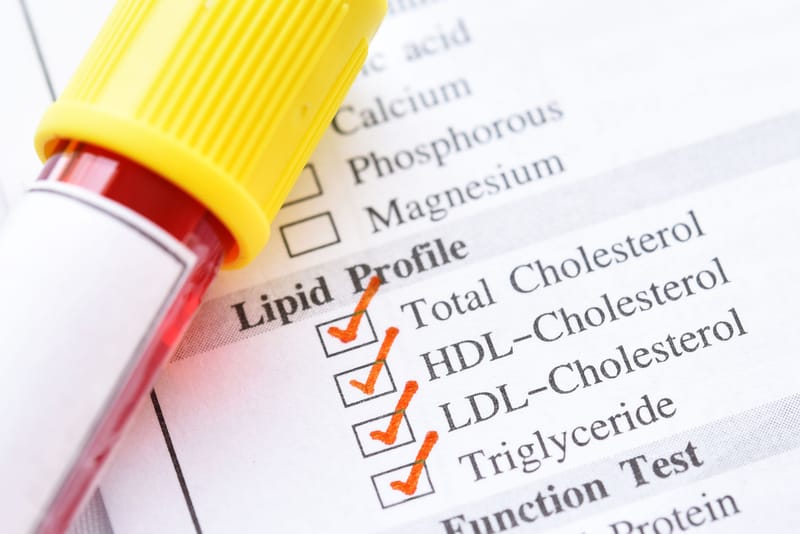
Dyslipidemia Management Protocol
Key principles
- The primary therapeutic target is LDL-cholesterol (LDL-C).
- Treatment decisions are based on overall CVD risk, not LDL level alone.
- Statins are first-line therapy for most patients requiring pharmacologic treatment.
- Treatment goals are defined according to risk category.
Lipid profile reference values
Parameter | Optimal | Borderline | High |
LDL-C | <2.6 mmol/L (<100 mg/dL) | 2.6–4.1 (100–159) | ≥4.1 (≥160) |
Total cholesterol | <5.2 mmol/L (<200 mg/dL) | 5.2–6.2 (200–239) | ≥6.2 (≥240) |
HDL-C | >1.0 mmol/L (>40 mg/dL men) | Low if below these values | |
Cardiovascular risk categories and LDL targets
Risk category | Examples | LDL target |
Low risk | No major risk factors | <3.0 mmol/L (<116 mg/dL) |
Moderate risk | Multiple risk factors | <2.6 mmol/L (<100 mg/dL) |
High risk | Diabetes, CKD, markedly elevated risk score | <1.8 mmol/L (<70 mg/dL) |
Very high risk | Established ASCVD (MI, stroke, PAD) | <1.4 mmol/L (<55 mg/dL) |
Indications for statin therapy
1) Secondary prevention (established ASCVD)
Management:
- Initiate high-intensity statin.
- Target:
- LDL-C <1.4 mmol/L (<55 mg/dL)
2) LDL-C ≥4.9 mmol/L (≥190 mg/dL)
- Suggestive of familial hypercholesterolemia.
Management:
- Start high-intensity statin
- Regardless of age or calculated risk
3) Diabetes mellitus (age ≥40 years)
Management:
- At least moderate-intensity statin
If any of the following is present, Use high-intensity statin:
- Diabetes ≥10 years
- Age ≥50
- Albuminuria
- eGFR <60 (CKD)
- Hypertension
- Smoking
- Family history of premature ASCVD
Target:
- LDL-C <1.8 mmol/L (<70 mg/dL)
4) Primary prevention (age 40–75 years)
LDL-C: 1.8–4.9 mmol/L (70–189 mg/dL)
Step 1: Calculate 10-year ASCVD risk
ASCVD risk | Decision |
<5% | Lifestyle only |
5–7.4% | Consider moderate-intensity statin if risk enhancers present |
7.5–19.9% | Start moderate-intensity statin |
≥20% | Start high-intensity statin |
Risk enhancers (used when ASCVD risk 5–7.4%)
- Family history of premature ASCVD
- LDL ≥4.1 mmol/L (≥160 mg/dL)
- Metabolic syndrome
- CKD
- Chronic inflammatory disease
- South Asian ancestry
- Persistent elevated lipids
Statin intensity classification
Intensity | Medication | Expected LDL reduction |
High intensity | Atorvastatin 40–80 mg | ≥50% |
Moderate intensity | Atorvastatin 10–20 mg | 30–49% |
Low intensity | Simvastatin 10 mg | <30% |
Stepwise treatment approach
Step 1: Initiate statin
- According to indication and risk category.
Step 2: Reassess lipid profile
- After 4–12 weeks.
Step 3: If LDL target not achieved
- Add: Ezetimibe 10 mg once daily.
Step 4: If still above target (very high risk)
- Refer to specialist as appropriate.
Follow-up and safety monitoring
Baseline tests (before statin)
Mandatory:
- Lipid profile
- ALT
Creatine Kinase (CK):
- Not routine
- Check only if:
- History of muscle disease
- Previous statin intolerance
- Unexplained muscle symptoms
- Hypothyroidism
- CKD
- High-risk or frail patients
Routine follow-up
Test | Timing |
Lipid profile | 4–12 weeks after starting or dose change |
Lipid profile (stable) | Every 6–12 months |
ALT or CK | Only if symptoms develop |
Routine CK or LFT monitoring is not required in asymptomatic patients.
Muscle symptoms (statin myalgia)
Mild pain, CK normal or <3× ULN
- Continue statin.
- Reassure.
- Reassess in 2–4 weeks.
Persistent symptoms or CK 3–10× ULN
- Hold statin temporarily (for 2-4 weeks or until symptoms resolve).
- Check CK, TSH, renal function.
- Restart:
- Lower dose, or
- Different statin once symptoms resolve.
Severe symptoms or CK >10× ULN
- Stop statin immediately.
- Evaluate for rhabdomyolysis.
- Refer if indicated.
Liver enzyme elevation
ALT <3× ULN
- Continue statin.
- Repeat test in 4–6 weeks.
ALT ≥3× ULN (confirmed)
- Stop statin.
- Investigate possible causes.
- Restart lower dose or different statin after normalization.
Stop statin immediately if
- CK >10× ULN
- ALT ≥3× ULN with symptoms
- Suspected rhabdomyolysis
- Severe unexplained muscle pain
Author: Dr. Fahad Saad Almutairi